
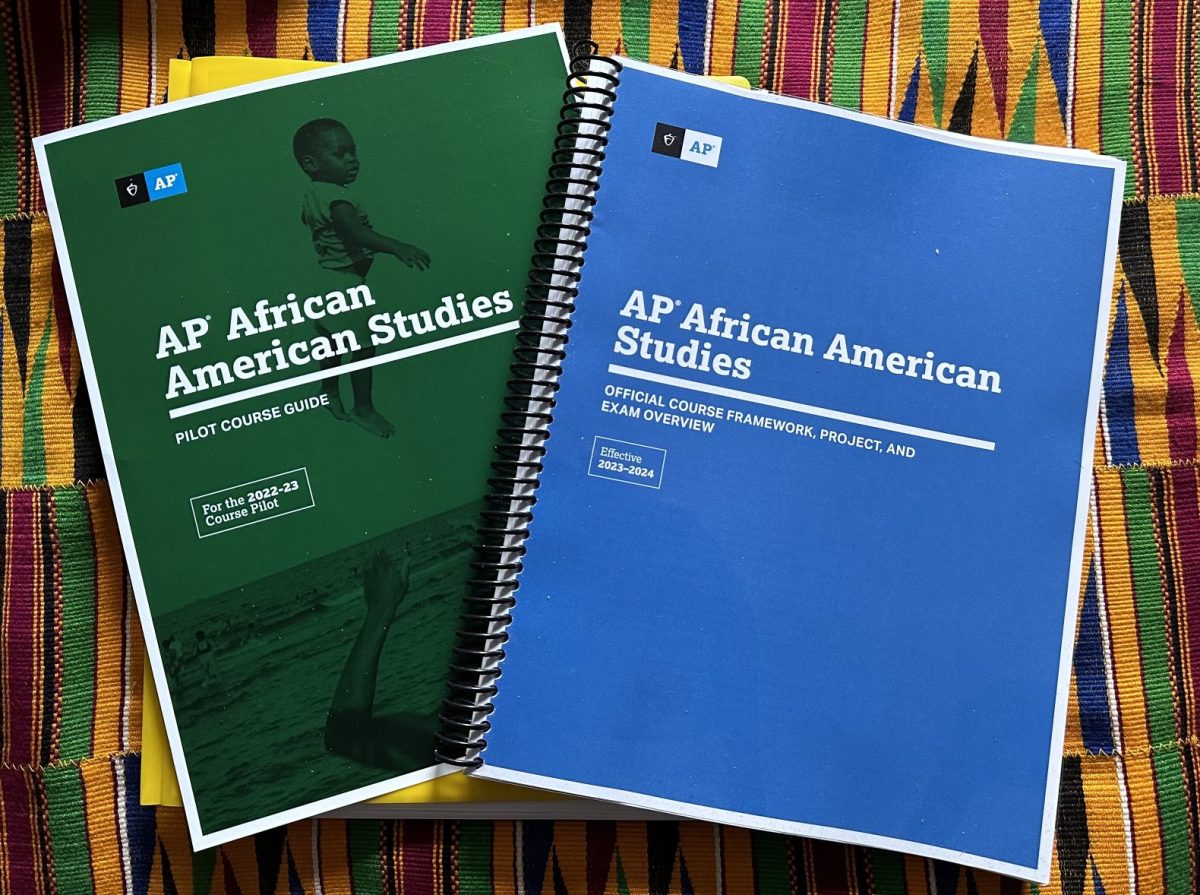
Cranford High School will expand its Advanced Placement course offerings next school year with the introduction of AP African American Studies, a course designed to deepen students’ understanding of African American history, culture, and the humanities. The class, developed by the College Board in recent years, reflects a growing national emphasis on inclusive historical perspectives.
According to Ms. Rendek, Supervisor of Social Studies and Business, the decision to bring the course to CHS was both strategic and philosophical. Because AP African American Studies is a relatively new College Board program, the district intentionally waited before adopting it.
“Oftentimes when there’s a new AP course, there are growing pains,” Ms. Rendek explained. “Sometimes resources are still being developed, like textbooks or instructional materials. I typically wait a year or two to make sure we can implement it with fidelity.”
The preparation process of implementing the course involved extensive research and collaboration. Ms. Rendek consulted with supervisors from other districts, examined the College Board’s Course and Exam Description, surveyed student interest, and identified teachers eager to teach the course. Schools across New Jersey, including high-performing districts such as West Windsor-Plainsboro, provided insight into how the course functions over the course of an academic school year. .
“I wanted to make sure we had strong resources and well-trained teachers,” Ms. Rendek said. “When we offer something new, it’s important that we’re doing it well.”
Beyond logistics, the course aligns with CHS’s broader educational mission. Ms. Rendek emphasized that AP African American Studies supports an even greater understanding of U.S. history than students may achieve simply from a required history course, while also expanding academic opportunities for students.
“We want students to develop a deeper understanding of American history,” she noted. “The African American experience is essential to that story. At the same time, we want Cranford students to have opportunities comparable to those offered in neighboring districts.”
Like other AP courses, AP African American Studies carries a high level of academic rigor and contributes to students’ college resumes. However, the structure and content distinguish it from traditional AP history classes. While courses such as AP U.S. History or AP World History are primarily chronological, AP African American Studies takes a more interdisciplinary-based approach. The curriculum covers the African American experience while integrating art, music, and cultural analysis.
“There’s a lot of art analysis and music woven into the course,” Ms. Rendek explained. “It’s still rooted in history, but it reaches students in a different way.”
The exam format also differs slightly from other AP histories. In addition to multiple-choice questions (MCQ), short-answer responses (SAQ), and a document-based question (DBQ), the course includes a research project component. This project is developed throughout the year, scored by the teacher using a rubric, and submitted as part of the student’s overall AP score. For many students, specifically those with test-taking anxiety, this feature may offer a great balance.
“If you’re someone with test anxiety, it can feel reassuring to know that a portion of your score comes from a research project you’ve worked on over time,” Ms. Rendek said. “There’s also a level of student choice, since students select their research topic.”
The course will initially be open to sophomores, juniors, and seniors, which is consistent with national enrollment patterns. Notably, there are no prerequisites, making it accessible to a broad range of students.
“It’s considered an access point course,” Ms. Rendek said. “Students who take it frequently go on to take other AP courses. I love that it opens doors.”
As with many new electives, initial enrollment remains difficult to predict. Ms. Rendek anticipates that the course may begin with a smaller section, a common pattern for newly introduced classes.
“Sometimes students just don’t know yet,” she explained. “Word of mouth plays a big role. Over time, interest often grows.”
Regardless of class size, the addition represents a meaningful expansion of CHS’s curriculum.
“Even if a course runs with 15 students, that’s still 15 more students who have an opportunity that fits their interests,” Ms. Rendek said. “Overall, I just saw positives. I want more opportunities for our students.”
With its blend of history, cultural study, and research-based learning, AP African American Studies promises to offer CHS students a new lens through which to examine the past. Students should certainly not overlook this brand-new course when course selection rolls around in March.